
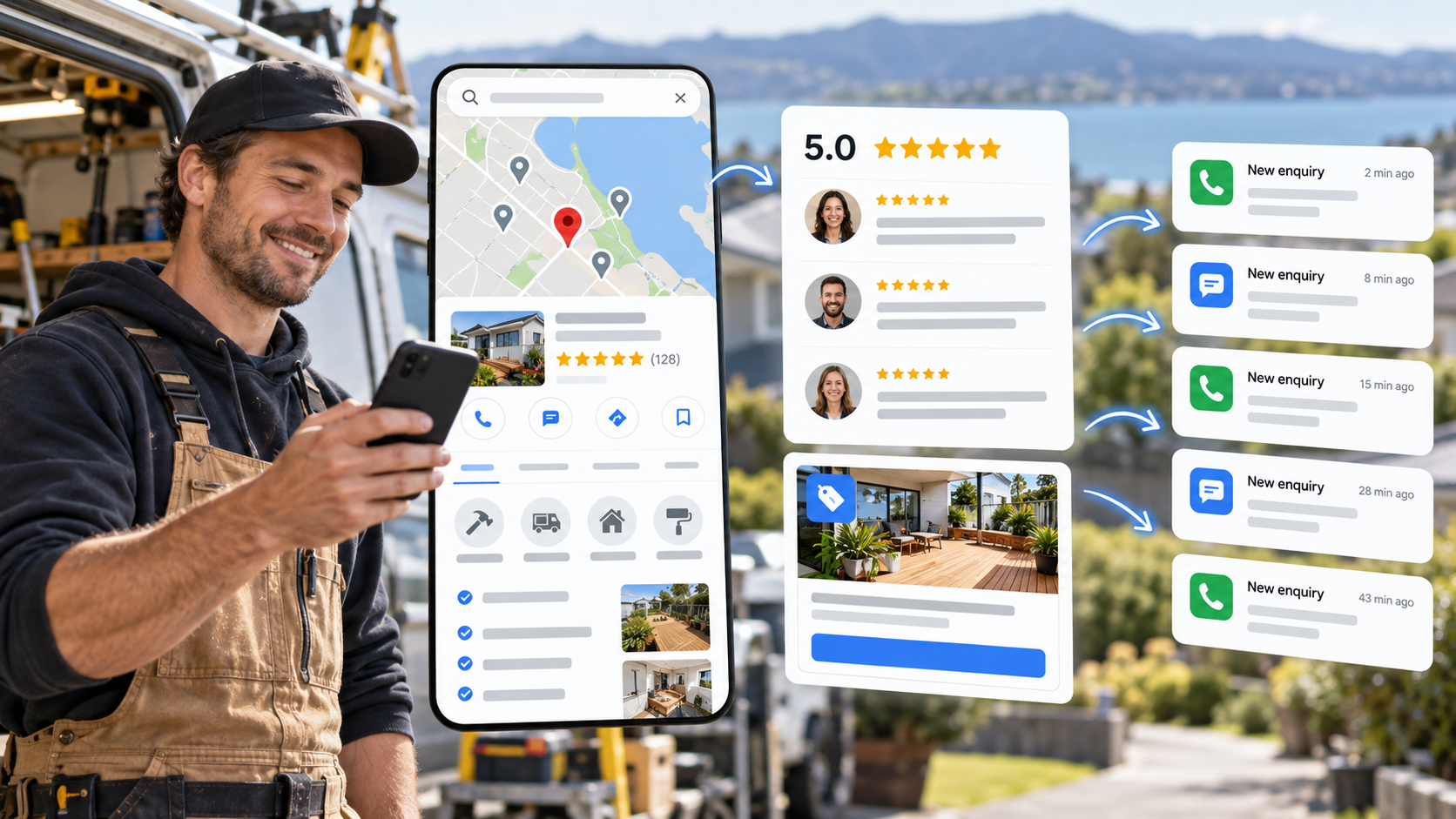
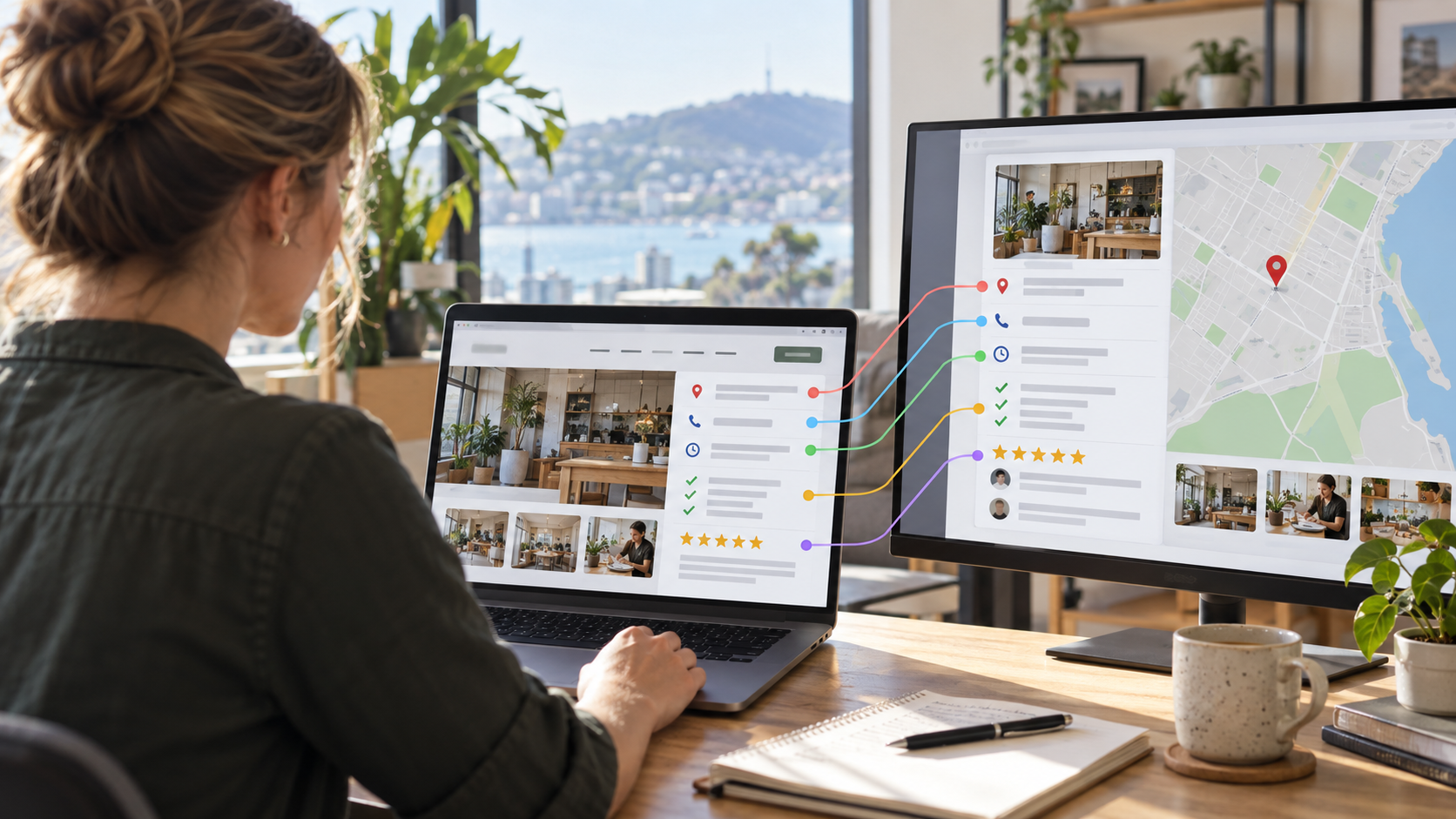
If you’re wondering whether your Google Business Profile should match your website, the simple answer is yes — where the information represents the same facts about your business . Google uses information from a range of sources to understand who you are, what you do, where you operate and which searches your business may be relevant for. Your website and Google Business Profile are two of the most important pieces of that picture. That doesn’t mean every word on your website needs to be copied onto your Google Business Profile. It does mean that your core business information, services, locations and overall message should tell a consistent story. When they don’t, you can create confusion for potential customers — and make it harder for Google to clearly understand your business. 1. Make Sure Your Core Business Information Matches The first place to start is with the basic information about your business. When I carry out Google Business Profile audits, I regularly find simple inconsistencies between the profile and the company website. These can include: Different phone numbers Different addresses Incorrect opening hours Out-of-date holiday hours Different business names Conflicting information about where the business operates These may seem like minor details, but consider them from a customer's point of view. If your Google Business Profile says you close at 5:00 pm but your website says 5:30 pm, which one should they believe? If I’m carrying out an audit and I can't work out which information is correct, a potential customer could have exactly the same problem. Your website should reinforce the information people see on your Google Business Profile. Remember Your Special Opening Hours Another commonly overlooked area is special hours. Public holidays, regional holidays and Christmas opening hours can all affect when your business is available. Your Google Business Profile allows you to specify special hours rather than changing your normal opening hours every time a holiday occurs. Keeping this information up to date helps customers know when they can contact or visit you. Where appropriate, the information on your website should also reflect significant changes to your normal trading hours. 2. Be Clear About the Areas You Serve If you're a service-area business, your Google Business Profile allows you to specify the geographical areas you serve. Your website should support this. That doesn't mean stuffing dozens of town names into every page. Instead, make it obvious where you genuinely provide your services. You might include service areas: In your website footer On your contact page Within individual service pages On dedicated location pages where appropriate In your About or Service Areas section For example, if your Google Business Profile tells Google that you operate throughout Christchurch and surrounding areas, but your website never mentions Christchurch, there is less supporting information connecting the website to that location. The goal is consistency. Your Google Business Profile and website should both give customers a clear understanding of where you operate. 3. Match Your Categories With the Services You Actually Provide One of the biggest problems I see with Google Business Profiles is businesses adding a huge list of services while paying very little attention to their categories. Your primary category is extremely important because it helps Google understand the main type of business you operate. You can also add relevant secondary categories where they genuinely describe other important parts of the business. The mistake is choosing one broad category and then adding every imaginable service beneath it. Instead, think about the structure logically. Your Profile Should Tell a Clear Story Let's say a business offers several distinct groups of services. Its Google Business Profile categories should accurately represent those areas where suitable categories exist, while its services should describe what the business actually provides. Your website should then support those services with useful content. Ideally, someone should be able to look at your Google Business Profile and then visit your website and immediately recognise the same business. They should see the same core services, locations and overall offering. Google should be able to make the same connection. 4. Your Website Should Support What Your Profile Says Your website gives you much more space than your Google Business Profile to explain what you do. Use it. If an important service appears on your Google Business Profile, there should usually be relevant supporting information somewhere on your website. That could be a dedicated service page or a clearly defined section of another page. For example, if you're an electrician and your Google Business Profile prominently lists heat pump installation, your website should contain useful information about your heat pump installation service. The website adds context that a Google Business Profile simply doesn't have room to provide. The two work together. 5. Reviews Can Reinforce Your Services Reviews are another valuable part of the picture. A customer describing the actual service you carried out provides useful information to prospective customers who are comparing businesses. For example, a review saying: “James installed our new heat pump and explained everything clearly.” is far more informative than a review that simply says: “Great company.” Both reviews are positive, but the first tells future customers something about the service that was provided. Reviews can therefore help reinforce the services associated with your business while also giving prospective customers reassurance that other people have successfully used you for the same type of work. 6. Use Your Google Business Profile Content Consistently Your profile gives you several opportunities to reinforce what your business does. Depending on your business and what Google makes available for your category, these may include: Services Photos Updates or posts Products Reviews Business description Website links These elements should support the same overall message customers find when they reach your website. You don't need to duplicate everything word for word. In fact, you shouldn't. The objective is consistency of meaning , not identical content. If your website presents you as a specialist in one area while your Google Business Profile suggests that you primarily provide something completely different, there is a disconnect. 7. Check Your Google Business Profile Performance Once you start improving your profile and website, keep an eye on performance. Google Business Profile provides performance information showing how people interact with your listing. Depending on the information Google currently makes available, this can include actions such as: Calls Website clicks Direction requests Search activity Don't judge changes after only a couple of days. Local visibility is affected by numerous factors, including relevance, distance, competition, reviews and the searcher's location. Instead, look for trends over a longer period. The key question is whether you're gradually getting greater visibility for the right searches — and whether that visibility is turning into enquiries. A Simple Way to Check Everything There are quite a few things to check when comparing your website with your Google Business Profile. That's why I've created a Google Business Profile checklist that walks through the areas you should review. It covers both the Google Business Profile and the website, helping you identify information that is missing, inconsistent or needs improving. I've also included accompanying videos that explain the individual steps. If you'd prefer someone to look at your profile specifically and identify areas that could be improved, you can also start with a free Google Business Profile audit . Conclusion So, should your Google Business Profile match your website? For your core business information and the story you're telling customers, absolutely. Your business name, address, phone information, opening hours, service areas and key services should be consistent wherever they appear. But don't think of your website and Google Business Profile as duplicates. Think of them as two parts of the same system. Your Google Business Profile helps people discover and evaluate your business directly in Google Search and Maps. Your website gives them the deeper information they need to understand your services and decide whether you're the right business for them. When both communicate the same clear message, you're making things easier for Google — and, just as importantly, easier for your prospective customers.
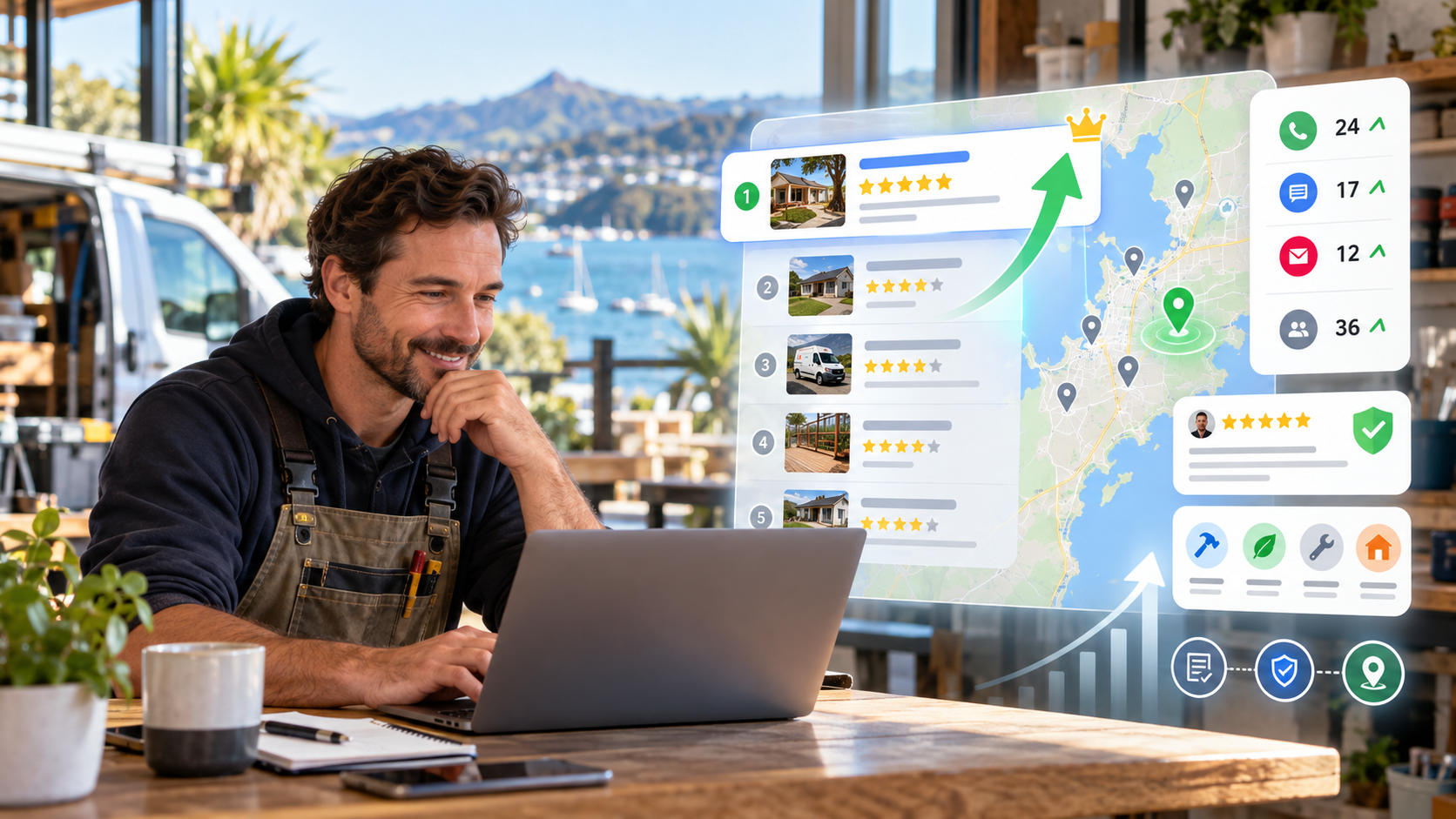
If you're asking yourself, how do I get my Google Business Profile to rank higher? , there are several areas you need to work on. Google doesn’t rank local businesses based on one single factor. Its own guidance says local results are mainly based on relevance, distance and prominence . Google Support You can’t control where every potential customer is searching from, but you can improve how relevant your business appears and how strong your local presence looks compared with competitors. In this article, I’m going to focus on three important areas: Show Google clearly what your business does Build stronger local proof through reviews Strengthen your local authority across the web These are not the only factors involved, but they are important ones to get right. 1. Show Google Clearly What Your Business Does The first thing to look at is your Google Business Profile categories and services. Your primary category should describe the main thing your business does. For example, if you are a plumber, your primary category might simply be: Plumber But many businesses stop there. Google allows one primary category and up to nine additional categories. However, Google also recommends using as few categories as possible while making sure they accurately describe your core business. So this is not about adding every category you can find. It is about choosing the additional categories that genuinely represent important parts of your business. For example, a plumbing business might also genuinely provide services connected with: Gas fitting Drainage Hot-water systems Water filtration Other specialist plumbing work The categories you select can affect your local ranking, so they matter. Add the Services You Actually Provide The next step is to look at your services. Your service list gives Google more detail about the actual work you carry out. For example, rather than simply saying you are a plumber, your services might include: Hot-water cylinder installation Leak repairs Drain clearing Gas fitting Water softener installation Only add services you genuinely provide. Google can also use information from your website and other online sources when building its understanding of your business. That means your website should support what you are saying on your Google Business Profile. If you claim an important secondary category or service, ideally there should be relevant information about that area on your website too. The clearer and more consistent this information is, the easier it is for Google to understand what searches your business may be relevant to. 2. Build Strong Local Proof Through Reviews The second area is reviews. Reviews do two jobs. They help potential customers decide whether they trust you, and they also contribute to Google's understanding of how prominent your business is locally. Google specifically says that more reviews and positive ratings can help local ranking. That is why a steady flow of genuine reviews is so valuable. Make Asking for Reviews Part of Your Process Nowadays, there are plenty of ways to make review requests part of your normal customer follow-up. You can ask through: Email Text message Your invoice process Your email signature A QR code A direct Google review link Google actively recommends reminding customers to leave reviews, provided the reviews reflect a genuine experience and you are not offering incentives. The important thing is consistency. Rather than getting a lot of reviews in one month and then nothing for six months, build review requests into your normal process. Detailed Reviews Are More Useful to Customers A review that simply says: “Great service.” is useful. But a review such as: “They installed our new water softener, explained everything clearly and left the place clean and tidy.” gives a future customer much more useful information. Google can also ask service-business customers what type of work was carried out, using information from your service list, website and other authoritative sources. That reinforces the importance of keeping your services accurate. You should also respond to reviews. Google encourages businesses to reply because it shows customers that their feedback matters. If you want a structured way to check the important areas of your profile, my Google Business Profile Checklist can help you work through them step by step. 3. Strengthen Your Local Authority The third area is local prominence. Google describes prominence as how well-known a business is, and says it can be influenced by things such as reviews and links from other websites. This is where your wider online presence becomes important. Your business may appear on: Local business directories Industry directories Trade association websites Local supplier websites School websites Charity websites Sports club websites Community organisations Traditionally, directory listings containing your business name, address and phone number are often called citations . The key thing is that the information should be accurate and consistent. Look for Genuine Local Mentions Some of the strongest local signals can come from genuine local relationships. For example, perhaps you: Sponsor a local sports team Support a charity Help a school Work with a local community organisation Belong to a local trade association If those organisations mention your business on their websites, that can create valuable local links and references. The important thing is that these relationships should be real. You should not be trying to manufacture links purely for SEO. Instead, think about the organisations your business already works with or genuinely wants to support. A local plumber might sponsor a junior football team. A builder might support a school fundraiser. A local service business might provide discounted or free help to a charity they genuinely care about. If that organisation then acknowledges the support on its website, that gives Google another external reference to the business. Keep Your Business Information Accurate Weak or inconsistent information can also make it harder for Google to understand your business. Make sure things such as these are correct: Business name Address Phone number Website Opening hours Special hours Categories Services Google says complete, detailed and up-to-date information can help a business appear in relevant local results. Google Support If your website says you close at 5pm but your profile says 6pm, fix it. If your phone number changed two years ago and some directories still show the old one, update them. If you have holiday or special opening hours, keep those current too. Don’t Chase One Ranking Trick The biggest mistake is looking for one magic tactic that will suddenly push your Google Business Profile to the top. That isn’t how local ranking works. Think instead about the three broad factors Google talks about: Relevance — how closely your business matches the search. Distance — how far away you are from the person searching. Prominence — how established and well-known your business appears. Google Support You can’t control distance. But you can improve relevance and prominence. You can make your profile clearer. You can improve your reviews. You can strengthen your website. You can build genuine local mentions and links. And you can make sure your business information is consistent everywhere. Those improvements work together. What Should You Do Next? Start by looking at the businesses that consistently rank above you. Compare: Their categories Their services Their reviews Their website Their local links Their directory presence Their overall profile completeness Then compare that with your own business. You’re looking for the gaps. You don’t have to fix everything at once. Start with the biggest weaknesses and improve them one by one. If you want a more detailed walkthrough, I’ve also created a free Google Business Profile masterclass that goes through the wider optimisation process and shows you what else to look at.
If you're asking yourself, how do I get my business higher on Google Maps? , there are several areas you need to look at. Google doesn't rank local businesses based on one single factor. Instead, local results are mainly influenced by relevance, distance and prominence. You can't control where the person searching is located, but you can improve how clearly Google understands your business and how strong your business appears compared with local competitors. In this article, we'll look at three areas that can help: Make your business more relevant Build more trust Strengthen your local authority These won't guarantee a particular Maps position, but they can help improve the signals Google uses when deciding which businesses to show in local search results. 1. Make Your Business More Relevant One of the first things to look at is your Google Business Profile categories. Many businesses set up their profile, choose one category and never look at it again. For example, a plumbing company might choose: Plumber That may be exactly the right primary category. However, the business may also genuinely operate in other areas that Google provides separate categories for. Depending on the company, those could include services connected with gas fitting, drainage or other specialist work. Google allows one primary category and additional categories, but the important thing isn't to add as many as possible. The categories should genuinely describe what the business is. Google specifically recommends choosing a small number of categories that accurately represent the business rather than adding a category for every individual service. Add the Services You Actually Provide Your services are another useful way of giving Google more information about what your business does. If you're a plumber, for example, you might provide services involving: Hot-water systems Drainage Gas fitting Water filtration Leak repairs Only include services you genuinely provide. The aim is to make your Google Business Profile as accurate and complete as possible. Your website should also support what you're saying on your profile. If you have an additional business category or important service on your Google Business Profile, ideally there should be relevant information about that area on your website as well. Google uses information from Business Profiles, websites and other sources when building its understanding of a local business. The clearer and more consistent that information is, the easier it is for Google to understand which searches your business may be relevant to. 2. Build More Local Trust The second area is trust. Reviews are one of the most visible trust signals on a Google Business Profile. Google says that the number of reviews and positive ratings can contribute to local prominence, which is one of the main factors used in local rankings. Reviews also matter enormously to potential customers. Imagine somebody is comparing three local plumbers. One has only a handful of old reviews. Another has a steady stream of recent feedback from customers talking about specific jobs they've completed. That can make the second business look far more established and credible. Encourage Genuine Customer Feedback The best reviews often include useful detail. For example: "Great service." is useful. But something like: "They installed our new water softener, explained how everything worked and left the area tidy." gives a potential customer much more information. It helps confirm what kind of work the business actually carries out. You shouldn't tell customers exactly what to write or offer incentives for positive feedback. Instead, make asking for genuine reviews part of your normal follow-up process. Consistency matters. A regular flow of customer feedback is generally more useful than getting a burst of reviews and then nothing for months. You should also reply to reviews naturally and helpfully. Google specifically recommends responding to reviews because it shows customers that you value their feedback. If you're not sure which areas of your profile need attention, my Google Business Profile Checklist gives you a useful starting point. Keep Your Business Information Accurate Trust also comes from getting the basics right. Your business hours should be accurate. Your special hours should be updated for holidays and other changes. Your phone number, website and business details should all be current. Google says complete and accurate Business Profile information makes a business more likely to appear in relevant local search results. This is one of the simplest things to check, yet it's surprisingly common to find profiles with outdated opening times, incorrect website links or missing information. 3. Strengthen Your Local Authority The third area is local authority, or what Google calls prominence . Prominence is Google's way of assessing how well-known a business is. Google says this can be influenced by information it finds around the web, including links to the business and customer reviews. This is where your broader online presence becomes important. Your business may appear on: Local directories Industry directories Trade organisations Local business websites Supplier websites Community websites These mentions can help reinforce information about your business. Traditionally, these listings are often referred to as citations , especially when they include your business name, address and phone number. The most important thing is accuracy. If your business details appear across several websites, make sure they're consistent and current. Add Useful Photos and Videos Photographs and videos are also valuable parts of your Google Business Profile. Google recommends adding photos and videos that show your storefront, products and services because they help customers understand what your business offers. For a local service business, useful examples could include: Before-and-after photographs Recently completed jobs Your team Your vehicles Your premises Tools and equipment Different services you provide Before-and-after photos can be particularly effective because they quickly show the transformation you've achieved for a customer. If you're repairing a roof, laying tiles or renovating a bathroom, the finished result can often communicate far more quickly than a long description. Video can work well too. You might briefly explain: What problem you found What work you're carrying out Why you've chosen that solution What the finished result looks like This type of content is valuable primarily because it gives prospective customers useful evidence of the work you do. Don't Chase One Ranking Trick If you want to get your business higher on Google Maps, don't concentrate on finding one clever trick. Google's own guidance points back to three broad factors: Relevance — how closely your business matches the search. Distance — how far the business is from the person searching. Prominence — how well-known and established the business appears. You can't control all three. You can't change the searcher's location. But you can improve your relevance and prominence by giving Google better information and building a stronger overall local presence. What Should You Do Next? Start by comparing your Google Business Profile with the businesses that regularly appear above you. Look at: Their categories Their services Their reviews Their photographs Their website Their wider online presence Then look for the gaps in your own profile. You don't necessarily need to change everything at once. A series of small improvements can gradually make your business easier for Google to understand and more convincing to the customers who find you. If you'd like a more structured way to work through your profile, you can start with my FREE Google Business Profile Audit . It can help identify the areas that may be holding back your local visibility